Mirror, mirror, on the wall, which type of mirror is the fairest of them all? Well, that depends on whom you ask, but we happen to adore Eglomise.
Verre Eglomise is a French term meaning gilded glass. It refers to applying both a design and gilding onto the rear face of glass to produce a decorated and mirrored finish. To be clear, Eglomise is not actually the style of the mirror; it is the decorative technique used to create this type of mirror.

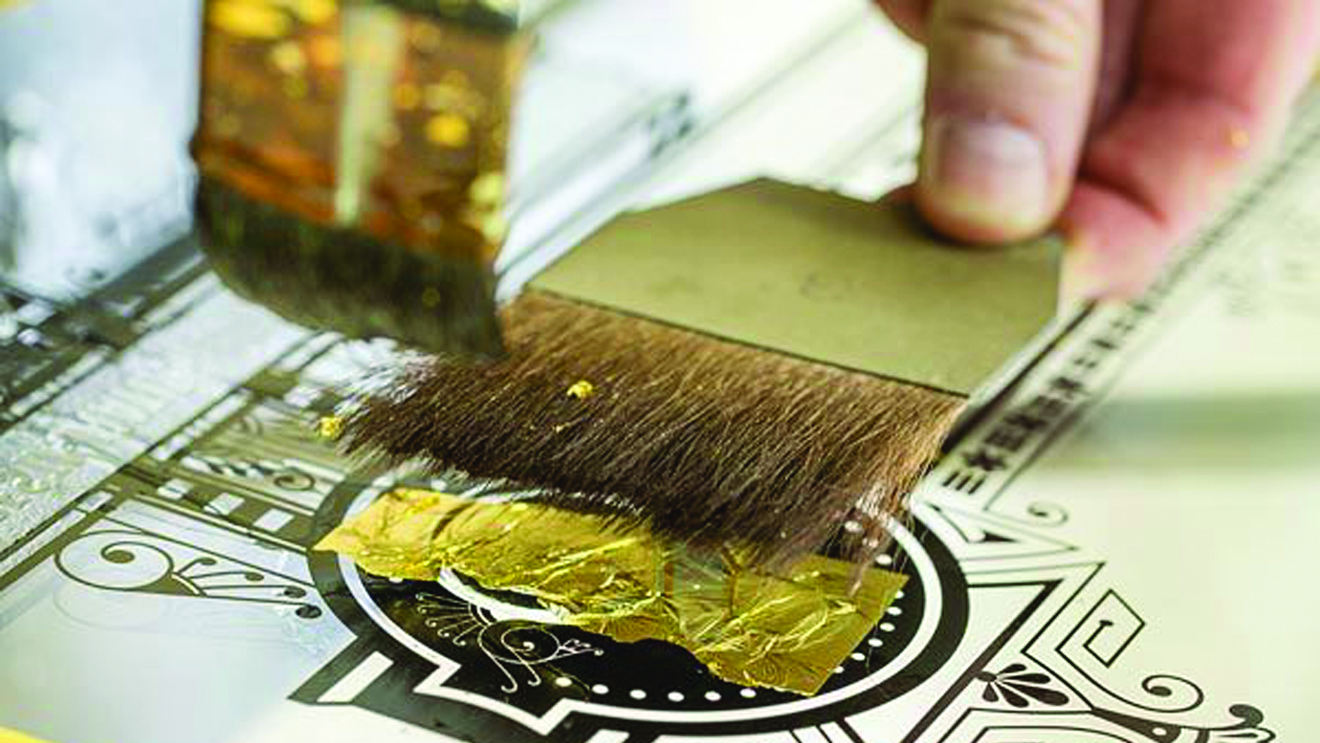
In this technique, the back side of a piece of glass is gilded with gold or metal leaf. The glass is painted with an oil or water-based glue known as gold size; the leaf is then gingerly placed upon the glue and, using a static-free brush, smoothed onto the glass. Because of its thinness, one must take care not to tear or disintegrate the leaf while placing it, as once it is on, it’s on. Any cracks, folds, or bubbles will affect the appearance and reflective nature of the front surface. An oil-based size will give the leaf a matte finish, reducing the surface’s reflective quality.
The next step in the process is to scrape or scratch away an area of the gilding, creating a negative space, which can be a simple pattern engraved in conformity with the shape of the mirror, or it may be a far more elaborate design of a flower or bird, for example. To create a picture on the surface, the artisan must engage in “reverse painting,” laying down the highlights first, then layering in the colors and shading behind.
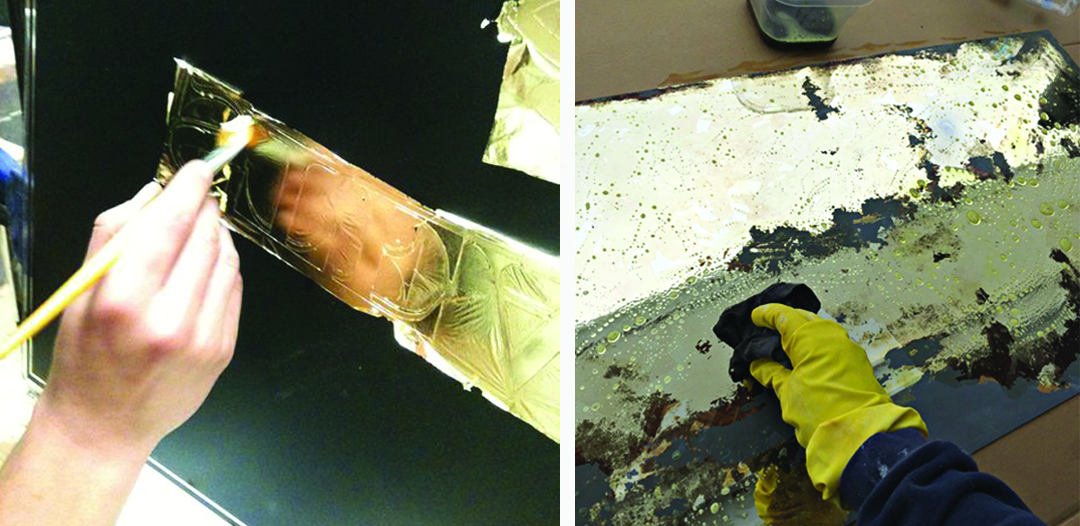
Finally, the entire back surface is painted with enamel, which fills in any negative space left by the engraving when the piece is viewed from the front. Black or dark enamel is generally used, but a burnt umber may also be employed to enhance the glow of the reflective gold surface.
This technique dates back to pre-Roman eras – maybe as early as the Egyptians – however, its name is derived from the 18th-century French decorator and art dealer Jean Baptiste Glomy (1711 – 1786), who was responsible for its revival in popularity. Because of him, the Eglomise technique began appearing in paintings, furniture, challises, and jewelry. It is also often seen in the form of decorative panels on clock faces and, in more modern history, in window signs and advertisement mirrors.
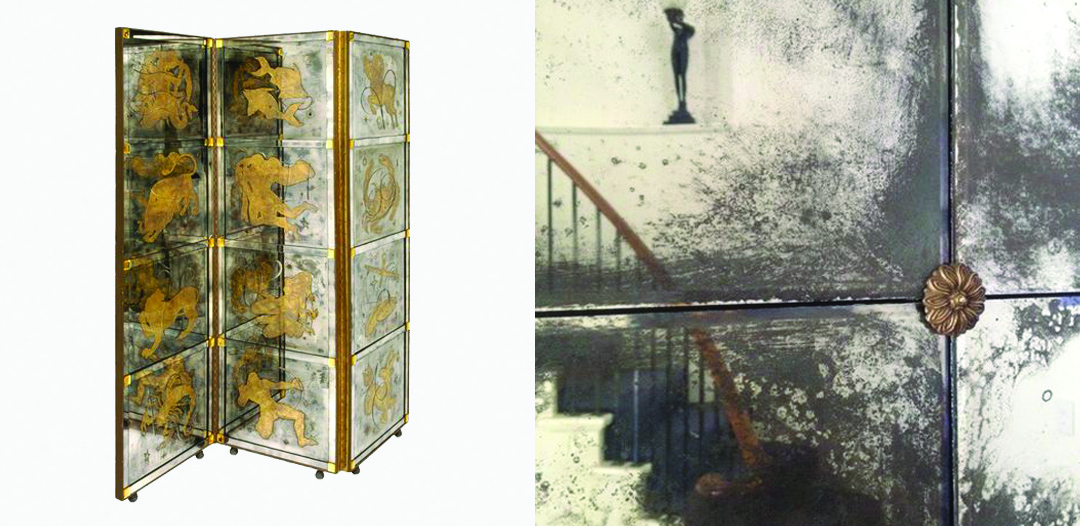
In recent years, the Eglomise term has been used to describe gilded and distressed mirrors with no actual design or pattern applied. In this case, the process is to apply the leaf and either remove some gilt and then directly paint on the enamel or leave the gilt entirely intact before painting with enamel. These mirrors have been put through specific processes and treatments to achieve an antiqued look, not the Eglomise technique.
In truth, a better term for these mirrors would be the less exotic “Distressed Hand-Gilded Mirror,” which is not as sexy but far more accurate. However, their aged appearance makes them the perfect choice for buyers who love the juxtaposition of a vintage touch with contemporary home décor, particularly when paired with an ornate frame.
________________________
ERIC BRAND
Founded in 1996 and based in San Francisco, Eric Brand offers custom-styled furniture and worldwide sourcing along with exquisite materials and finishes, specifically for the high-end residential design market and hospitality industry.